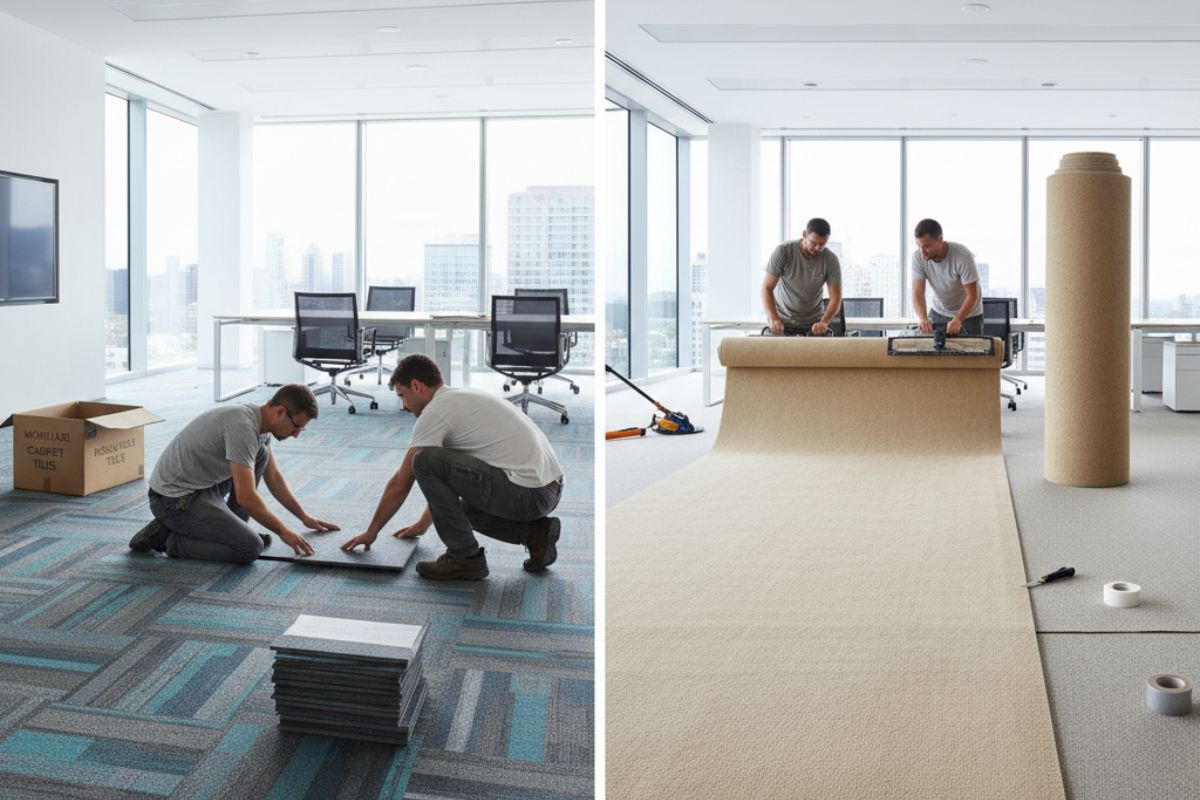
When it comes to flooring options, carpet remains one of the most popular choices for both commercial and residential spaces. Its warmth, comfort, and sound-dampening qualities make it a go-to option for many homeowners and businesses. But once you’ve decided on carpet, the next big decision is: carpet tiles or carpet rolls (also known as broadloom carpet)?
While both serve the same fundamental purpose, providing a soft, textured flooring option—there are significant differences between carpet tiles and carpet rolls in terms of installation, cost, maintenance, design options, and suitability for various spaces.
In this comprehensive guide, we’ll walk you through the pros, cons, and use cases of each to help you make an informed choice.
What Are Carpet Tiles?
Carpet tiles, also known as modular carpet or carpet squares, are pre-cut pieces of carpet—usually 18″x18″, 24″x24″, or 50cm x 50cm, that are installed piece by piece directly onto the subfloor or existing flooring.
They’re a popular choice for commercial settings, such as offices, airports, and schools, but are increasingly being used in homes, especially in basements, playrooms, or other high-traffic areas.
✅ Pros of Carpet Tiles
- Easy Installation: Carpet tiles are relatively easy to install, even for DIYers. They often come with peel-and-stick backing or require only a simple adhesive. No need for stretching or tacking like broadloom carpet.
- Modular and Replaceable: Damaged or stained tiles can be replaced individually, which is a huge advantage in busy areas where wear and tear is likely.
- Design Flexibility: You can create patterns, borders, and color blocks easily using different colored tiles. Ideal for creative and custom designs.
- Less Waste: Carpet tiles generate less waste during installation, especially in irregularly shaped rooms. You can use leftover tiles in closets or corners.
- Quick Drying and Breathability: Most tiles have a backing that allows air circulation, helping with moisture issues, great for basements.
- Sustainable Options: Many carpet tiles are made from recycled materials and are fully recyclable themselves.
❌ Cons of Carpet Tiles
- Seam Visibility: The seams between tiles may be visible, especially with low-pile or solid color designs.
- Cost per Square Foot: While installation is cheaper, the cost per square foot for carpet tiles may be higher than for carpet rolls.
- Limited Plushness: Carpet tiles are generally thinner and less plush than wall-to-wall broadloom carpets.
- Alignment Issues: If not installed carefully, tiles can become misaligned or look inconsistent over time.
What Is a Carpet Roll (Broadloom Carpet)?
Carpet roll, or broadloom carpet, is a large roll of carpet—usually 12 to 15 feet wide—that is cut to size and installed wall-to-wall. It is the traditional form of carpeting and is a staple in residential spaces and some commercial environments.
Broadloom is typically stretched over a carpet pad and attached to tack strips along the room’s perimeter.
✅ Pros of Carpet Rolls
- Seamless Appearance: In many cases, especially in standard-size rooms, broadloom carpet provides a smooth, continuous look with minimal visible seams.
- Luxurious Feel: Broadloom carpets are often thicker and plusher than carpet tiles, offering a more comfortable underfoot experience.
- Wide Range of Styles: A huge variety of colors, textures, materials, and patterns to choose from. Ideal for creating a cozy, elegant atmosphere.
- Lower Cost per Square Foot: Carpet rolls tend to be more affordable per square foot than carpet tiles, though installation may cost more.
- More Padding Options: With broadloom, you can install an extra-thick carpet pad underneath for extra softness and sound insulation.
❌ Cons of Carpet Rolls
- Difficult Installation: Installation usually requires professionals. It involves stretching, tacking, and seaming. Not ideal for DIY.
- Challenging Repairs: If a section gets damaged or stained, it’s difficult to fix without replacing the whole carpet.
- Waste and Cutting Issues: Cutting a large roll to fit an irregular room can result in significant material waste.
- Harder to Transport: A carpet roll is bulky and heavy, making delivery and storage more challenging.
- Moisture Problems: Broadloom is more prone to moisture retention, mold, and mildew, especially in damp environments like basements.
Carpet Tiles vs. Carpet Roll: Side-by-Side Comparison
| Feature | Carpet Tiles | Carpet Roll (Broadloom) |
| Installation | Easy, DIY-friendly | Requires professional install |
| Repairability | Replace individual tiles | Difficult to repair |
| Seam Visibility | Seams visible | Seamless (in smaller rooms) |
| Comfort | Moderately soft | Plush and luxurious |
| Design Options | Modular, mix-and-match | Wide range of styles |
| Durability | High, commercial-grade options | Varies, often soft but less durable |
| Cost per Sq. Ft. | Moderate to High | Lower per sq. ft. |
| Waste | Minimal | Can be significant |
| Moisture Resistance | Good (quick drying) | Poor (retains moisture) |
| Best For | High-traffic, commercial, DIY | Cozy, residential, seamless look |
Which Should You Choose?
Your choice between carpet tiles and carpet rolls will depend on several factors, including budget, room type, moisture levels, aesthetic preference, and foot traffic.
✔️ Choose Carpet Tiles If:
- You’re installing in a high-traffic area like a hallway, office, playroom, or basement.
- You want a DIY-friendly option.
- You need easy maintenance and spot replacement.
- You like the idea of mix-and-match design patterns.
- You’re dealing with moisture-prone areas.
✔️ Choose Carpet Rolls If:
- You’re carpeting a bedroom, living room, or lounge where comfort and luxury are key.
- You prefer a seamless, traditional look.
- You’re working with a larger budget for professional installation.
- You want a soft, thick underfoot feel.
- The space is less prone to spills or moisture.
Final Thoughts
There is no one-size-fits-all answer when it comes to carpet tiles vs. carpet rolls. Each has its place depending on the needs of the space, your aesthetic goals, and how much maintenance you’re willing to take on.
If you’re looking for a durable, modular, and versatile solution with easy upkeep, carpet tiles may be the right fit. But if you prioritize luxury, plushness, and a smooth, unified look, broadloom carpet is probably your best bet.
Whatever your choice, make sure to consider installation logistics, usage, room function, and your lifestyle to get the best results from your flooring investment.
Bonus: Pro Tips for Both Carpet Types
- Always check for VOC emissions in both carpet and adhesives, look for products certified by Green Label Plus.
- Get a sample before purchasing a large quantity.
- Inspect your subfloor, a clean, dry, and level surface is key for both types.
- Think long-term, choose stain-resistant, high-quality materials even if they cost more upfront.
Need help choosing the right carpet for your space? Let us know your room type, lifestyle needs, and budget, we can help you compare your best options. Also reach us for carpet installation in Sydney.