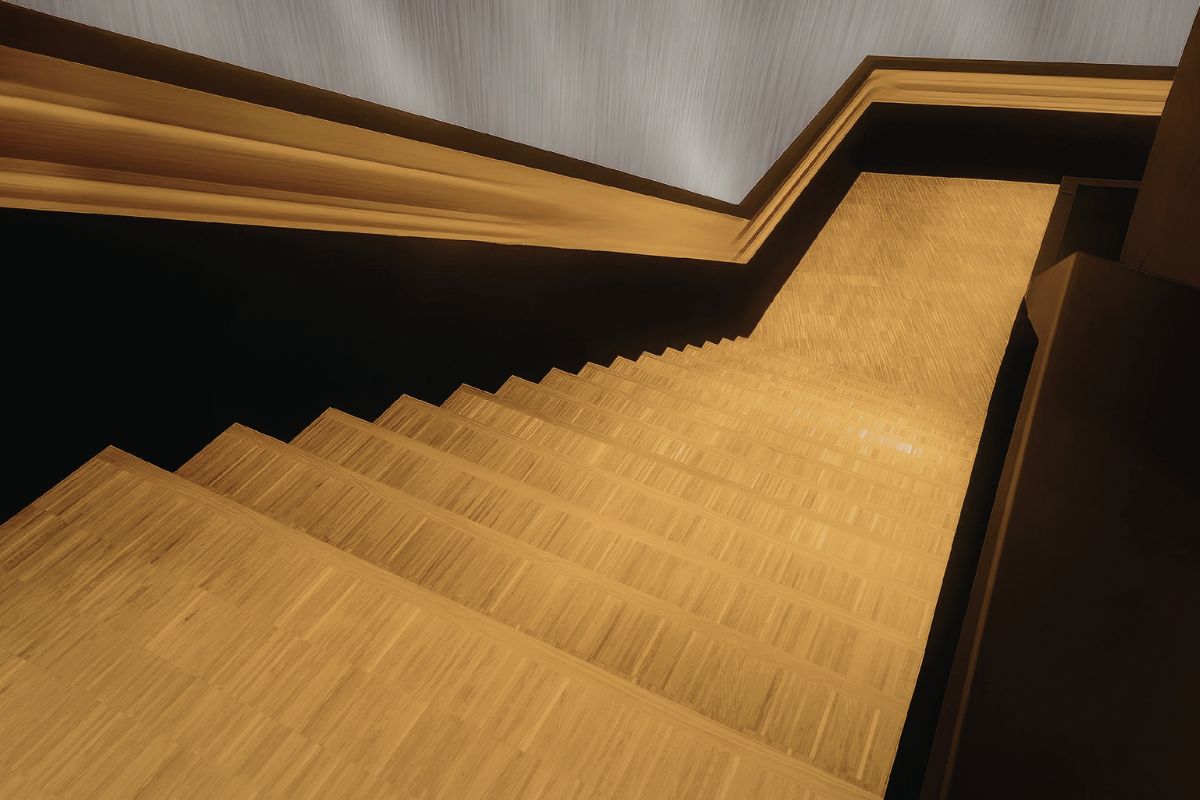
Stairs are one of the most demanding areas of any home. Unlike open floor spaces, staircases experience concentrated foot traffic on a small surface area, particularly along the nosing of each step. This constant wear means not all carpets are suitable. Choosing the wrong type can result in flattening, fraying, or visible wear within a short period of time.
For Australian homes, where staircases often see heavy daily use from families, pets, and indoor–outdoor living, selecting the right carpet is essential for durability, safety, and long-term value.
Why Stair Carpets Wear Differently
Stairs wear faster than flat floors because pressure is repeatedly applied to the same spots. Each step receives friction from both ascent and descent, and the carpet must bend tightly over stair edges. As a result, stair carpet must be more resilient than carpet used in bedrooms or low-traffic areas.
Key performance requirements for stair carpet include:
- Resistance to crushing and matting
- Strong fibre resilience
- Dense construction
- Secure installation
Appearance alone should not be the deciding factor.
Best Carpet Fibre for Stairs
a. Nylon
Nylon is widely recognised as the most durable carpet fibre for stairs and is the most practical choice for the majority of Australian households.
Nylon fibres are resilient, meaning they bounce back after compression. This helps maintain appearance over time, even under heavy foot traffic. Modern solution-dyed nylon, commonly available in Australia, also offers excellent resistance to stains, fading, and moisture.
Advantages:
- Excellent durability
- Strong resistance to wear and abrasion
- Suitable for families and pets
- Long service life
For main staircases, nylon is generally the safest and most reliable option.
b. Wool
Wool is a natural fibre valued for its appearance and comfort. It can perform well on stairs, but only when selected carefully.
High-quality wool carpets with dense construction and low pile height can handle moderate traffic. However, wool is softer than nylon and will show wear sooner in busy households. It also requires more maintenance and is more expensive.
Advantages:
- Natural fibre
- Good resilience when dense
- Premium appearance
Limitations:
- Higher cost
- Less durable than nylon
- Not ideal for high-traffic stairs
Wool is better suited to lower-traffic staircases or homes where appearance is prioritised over longevity.
c. Polyester and Triexta
Polyester and triexta carpets are commonly chosen for their softness and lower cost. While they perform well in bedrooms, they are generally not recommended for staircases.
These fibres lack the resilience needed to withstand constant compression and tend to flatten quickly on stair nosings.
Advantages:
- Lower upfront cost
- Good stain resistance
Limitations:
- Poor resilience
- Shorter lifespan on stairs
They may be acceptable for lightly used staircases but are not suitable for main traffic areas.
Best Carpet Pile Type for Stairs
a. Loop Pile
Loop pile carpets are among the most durable options for stairs. Their tight, structured construction helps resist crushing and wear.
Level loop or low-profile Berber styles are particularly effective. They maintain their shape well and disguise traffic patterns.
One consideration is pets: loop piles can snag if pets have sharp claws.
b. Cut Pile
Cut pile carpets can work on stairs if they are dense and firmly constructed.
Best options include:
- Twist pile
- Low-profile Saxony
Avoid plush or soft cut piles, as they flatten quickly and show wear along stair edges.
c. Cut and Loop
Cut and loop carpets offer a balance between durability and visual interest. When tightly constructed, they can perform well on stairs while also disguising wear.
Carpet Density Matters More Than Thickness
One of the most important indicators of stair carpet performance is density. Density refers to how tightly packed the fibres are, not how thick or soft the carpet feels.
A dense carpet:
- Resists crushing
- Holds its appearance longer
- Performs better on stair nosings
In many cases, a thinner, firmer carpet will outlast a thick, plush one on stairs.
Colour and Pattern Considerations
Stair carpets should be practical as well as attractive.
Recommended options:
- Mid-tone colours
- Greys, charcoals, and neutral blends
- Flecked or heathered finishes
These choices help disguise dirt, lint, and traffic wear. Very light colours show staining, while very dark solid colours can highlight wear marks.
Installation Is Critical
Even the best carpet will fail prematurely if installed incorrectly. Staircases require precise fitting, proper tensioning, and secure attachment around nosings.
Key installation considerations:
- Firm underlay (not overly soft)
- Tight stretching to prevent movement
- Professional carpet installation
Poor installation is a common cause of early carpet failure on stairs.
Conclusion
The carpet that wears best on stairs is one that prioritises durability over softness or appearance alone. For most Australian homes, the best-performing option is solution-dyed nylon with a dense loop pile or low-profile twist pile construction.
Combined with appropriate colour selection and professional installation, this type of carpet provides the best long-term performance, safety, and value for staircases subject to daily use.